
- Home
- About
- Services
- Certified Septic System Inspections
- Electronic Locating
- Event Rentals
- Grease Trap Disposal
- Hydro Excavation
- Hydro Jetting
- Lift Station Pump Service & Repair
- Line Cameras
- Personally Owned Campers & Rvs Cleaned
- Septic System Pumping Services
- Septic System Installation, Renovations & Repair
- Septic Tank Cleaning
- Sewage, Sludge & Filter Sand Disposal
- Areas Served
- Help
- Learning Center
- Request Service
- Request Quote
- Contact Us
- Home
- About
- Services
- Certified Septic System Inspections
- Electronic Locating
- Event Rentals
- Grease Trap Disposal
- Hydro Excavation
- Hydro Jetting
- Lift Station Pump Service & Repair
- Line Cameras
- Personally Owned Campers & Rvs Cleaned
- Septic System Pumping Services
- Septic System Installation, Renovations & Repair
- Septic Tank Cleaning
- Sewage, Sludge & Filter Sand Disposal
- Areas Served
- Help
- Learning Center
- Request Service
- Request Quote
- Contact Us
Kelly’s Septic Service (937) 592-3466
We pump, repair and clean Septic Systems in DeGraff, Ohio
We are a full service septic business supplying residential and commercial services in Auglaize, Champaign, Hardin, Logan, Shelby, and Union counties.
SERVICE CALLS
0
+
CERTIFIED TECHNICIANS
0
+
OHIO COUNTIES SERVED
0
+
YEARS IN BUSINESS
0
+
Kelly's Septic Service Reviews
Our customers love us!
Are you a new septic pumping customer from DeGraff, Ohio?
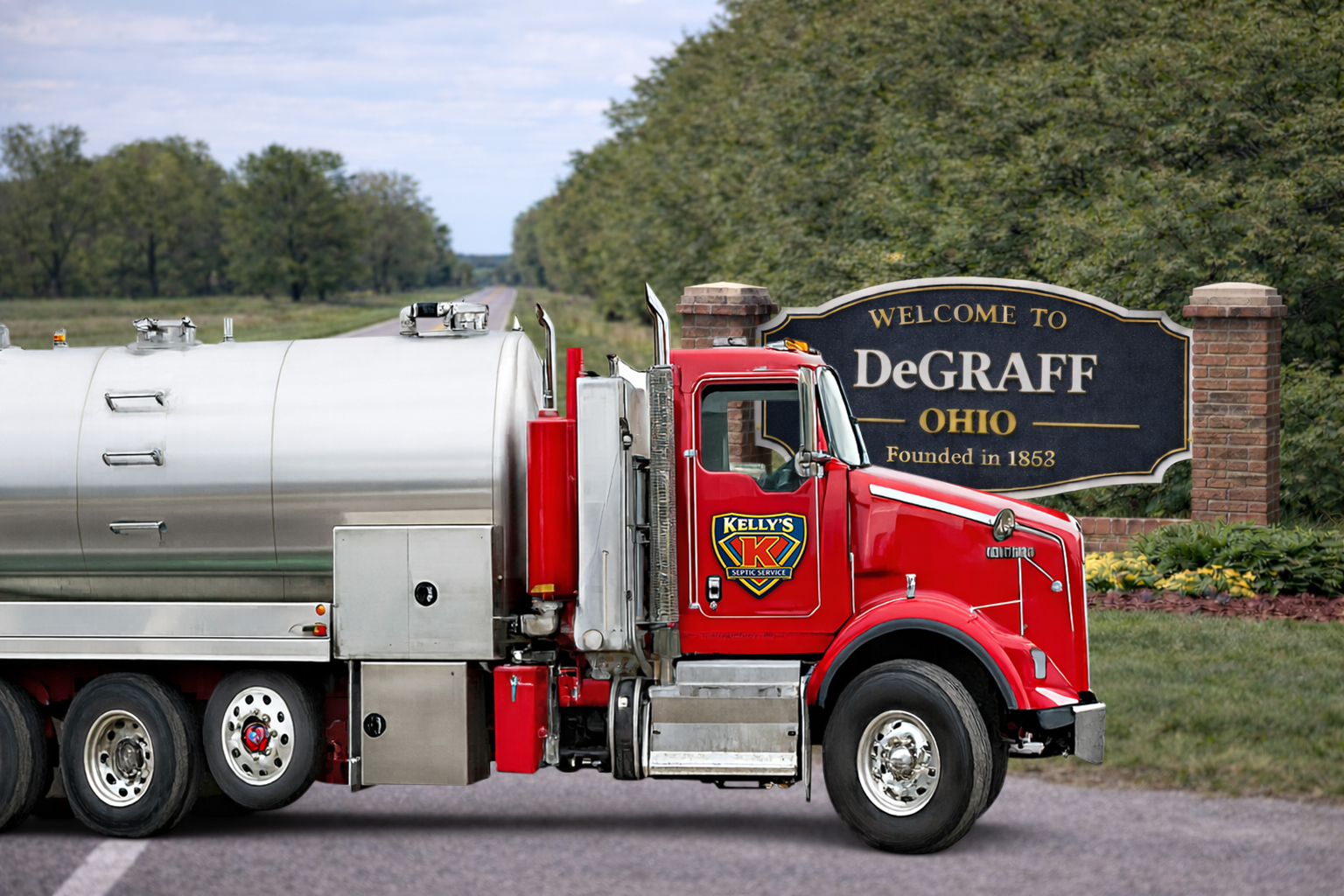
Kelly’s Septic Service proudly serves residents of DeGraff, Ohio
Let Us Know How We May Help You!
De Graff, Ohio, is a village in northeastern Logan County whose history reflects the influence of 19th-century transportation development and the surrounding agricultural economy. The village was platted in 1834 and named after Jacob De Graff, an early settler and landowner. Its early growth was closely tied to its location along important transportation routes, which allowed it to develop as a local service and trade center for nearby farms.
A major turning point in De Graff’s development came with the arrival of the railroad in the mid-1800s. Rail access connected the village to regional markets and supported the shipment of agricultural products, livestock, and goods. During this period, De Graff grew into a modest but active village with mills, small businesses, and residential neighborhoods serving both town residents and the surrounding rural population.
Agriculture has always played a central role in the village’s identity. The fertile farmland of northeastern Logan County supported generations of family farms, and De Graff functioned as a hub where rural residents could access supplies, services, and social institutions. While rail traffic declined in the 20th century, the village adapted without losing its small-town character or agricultural connections.
The physical layout of De Graff reflects its railroad-era origins, with a compact village center and residential streets extending into farmland. Churches, schools, and community organizations have long served as anchors of local life, reinforcing strong social ties and a sense of continuity among residents. Development has remained measured, preserving affordability and a quiet residential environment.
Today, De Graff is home to fewer than 1,300 residents and offers a lifestyle defined by stability, rural surroundings, and close community relationships. Its proximity to Bellefontaine and other Logan County communities provides access to broader services while allowing the village to maintain its independent identity and historic roots.
Kelly’s Septic Service is a locally focused company committed to providing reliable, professional septic solutions with an emphasis on quality workmanship, responsiveness, and clear communication. Serving both residential and agricultural properties, the company approaches each job with care and respect for the customer’s land and infrastructure.
Proudly serving the residents of De Graff, Ohio, Kelly’s Septic Service values its role as a trusted local provider in Logan County. Understanding local soil conditions, rural property layouts, and county regulations allows the company to deliver dependable septic services that support long-term system performance and peace of mind for the communities it serves.
Logan County, Ohio, is located in west-central Ohio and is a region distinguished by early frontier settlement, agricultural productivity, and a long- standing role as a regional transportation and service center. The county was established in 1817 and named after Benjamin Logan, a Revolutionary War officer and early pioneer. Its early formation placed it among Ohio’s foundational
counties during the state’s transition from frontier territory to organized
settlement.
Prior to European American settlement, the area was inhabited by Native
American tribes, including the Shawnee, who utilized the region’s rivers, forests,
and rolling terrain for travel and subsistence. Following treaties and land openings
in the early 19th century, settlers moved into Logan County, clearing land for
farming and establishing early communities that would become the county’s
towns and villages.
Agriculture has long been central to Logan County’s economy. Fertile soils
and varied terrain supported grain farming, livestock production, and later
diversified agriculture.
Communities such as Bellefontaine, West Liberty, Quincy, Zanesfield, De Graff, Lakeview, and Russells Point developed as service centers for surrounding farmland, each shaped by its proximity to transportation routes and
natural features.
A defining characteristic of Logan County is its transportation history.
Railroads played a major role in 19th-century development, positioning Bellefontaine as a key rail hub. The county also gained geographic distinction as the home of Campbell Hill, the highest natural point in Ohio at 1,549 feet. This
elevated terrain influenced settlement patterns and continues to be a notable
geographic feature of the state.
Logan County also includes Indian Lake, a major recreational destination
created from a canal-era reservoir. Communities such as Lakeview and Russells
Point evolved around the lake, adding tourism and seasonal population growth to
the county’s agricultural foundation. This blend of farming and recreation gives
Logan County a more diverse land-use profile than many neighboring counties.
Geographically, Logan County features gently rolling farmland, river systems, and areas of higher elevation compared to surrounding counties. These conditions affect drainage, soil composition, and infrastructure planning. Outside incorporated areas, many homes and farms rely on private wells and septic
systems, making proper system design and maintenance especially important.
Today, Logan County is home to approximately 46,000 residents and is known for its balance of agricultural tradition, historical significance, and
recreational opportunity. Its identity blends frontier history, rail and canal-era
development, and modern rural living, making it one of west-central Ohio’s most
geographically and historically distinctive counties.
Kelly’s Septic Service is a locally focused company committed to providing reliable, professional septic solutions with an emphasis on honesty, responsiveness, and quality workmanship. Serving both residential and agricultural properties, the company approaches every job with care, clear communication, and respect for the customer’s land and system needs.
Proudly serving the residents of Logan County, Ohio, Kelly’s Septic Service values its role as a trusted local provider. Understanding county-wide soil conditions, rural property layouts, and regulatory requirements allows the company to deliver dependable septic services that support long-term system performance, environmental protection, and peace of mind for the communities it serves.
Kelly’s Septic Service is a locally focused company committed to providing reliable, professional septic solutions with an emphasis on honesty, responsiveness, and quality workmanship. Serving both residential and agricultural properties, the company approaches every job with care, clear communication, and respect for the customer’s land and system needs.
Proudly serving the residents of Logan County, Ohio, Kelly’s Septic Service values its role as a trusted local provider. Understanding county-wide soil conditions, rural property layouts, and regulatory requirements allows the company to deliver dependable septic services that support long-term system performance, environmental protection, and peace of mind for the communities it serves.
Kelly's Septic Service, LLC
1771 County Rd. 130
Bellefontaine, Ohio 43311
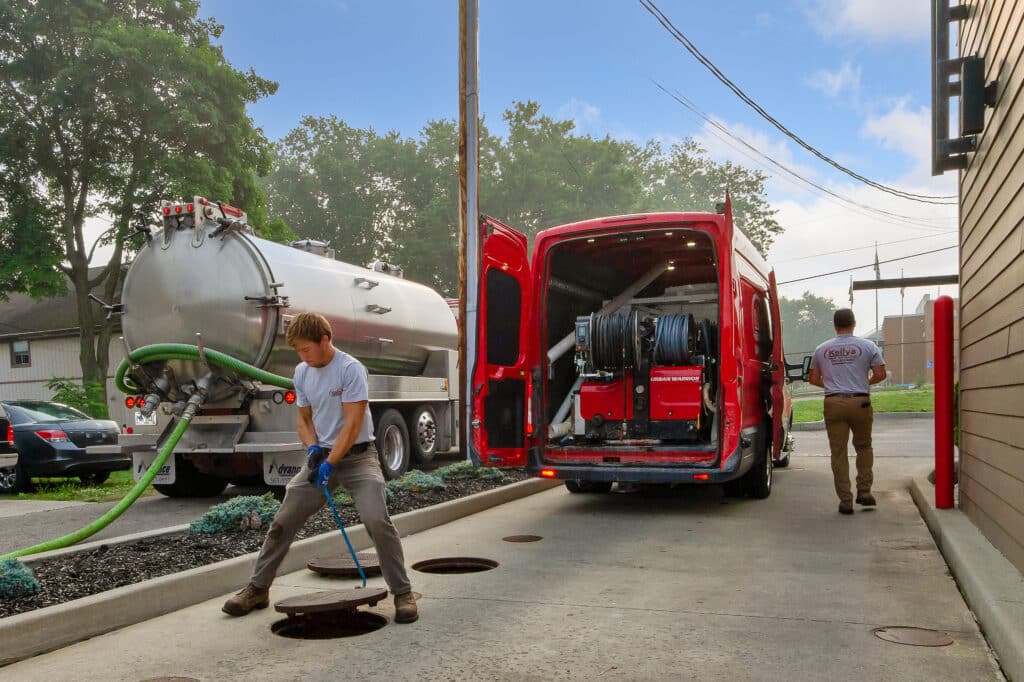
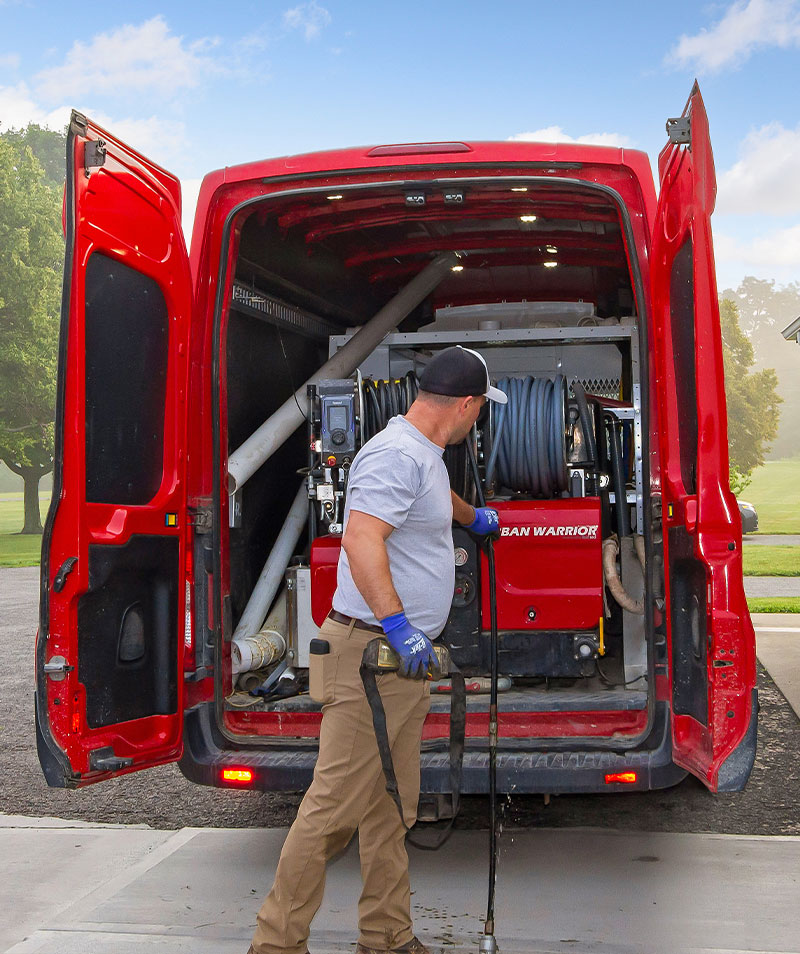
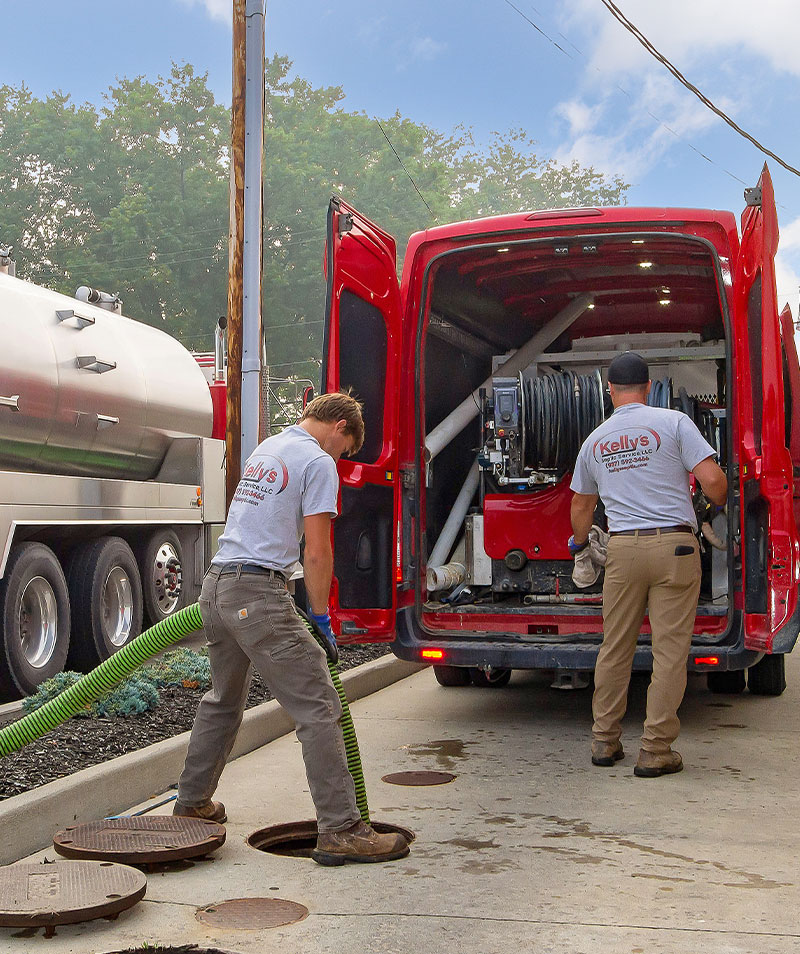
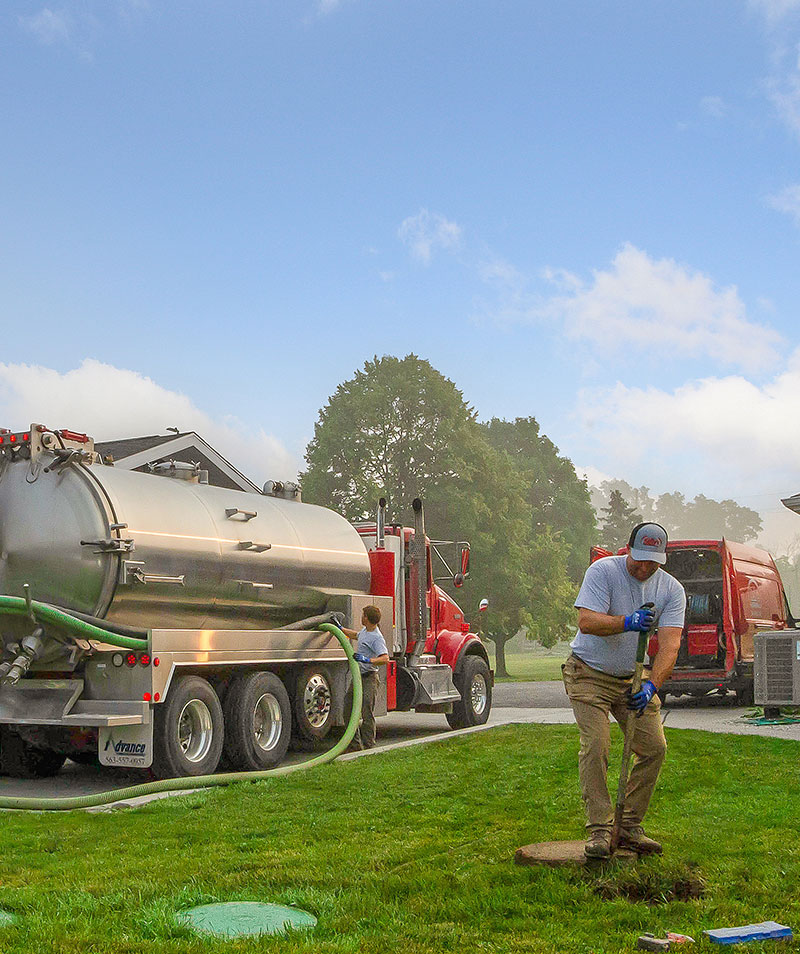
At Kelly’s Septic Service, we offer efficient and reliable pumping services to meet the needs of both residential and commercial properties. Whether you have a small residential septic tank or a large commercial tank, our experienced team is equipped to handle pumping jobs of all sizes. With our powerful trucks and optional power washing capabilities, we ensure thorough and effective pumping to keep your septic system functioning at its best.
Residential and Commercial Tank Pumping:
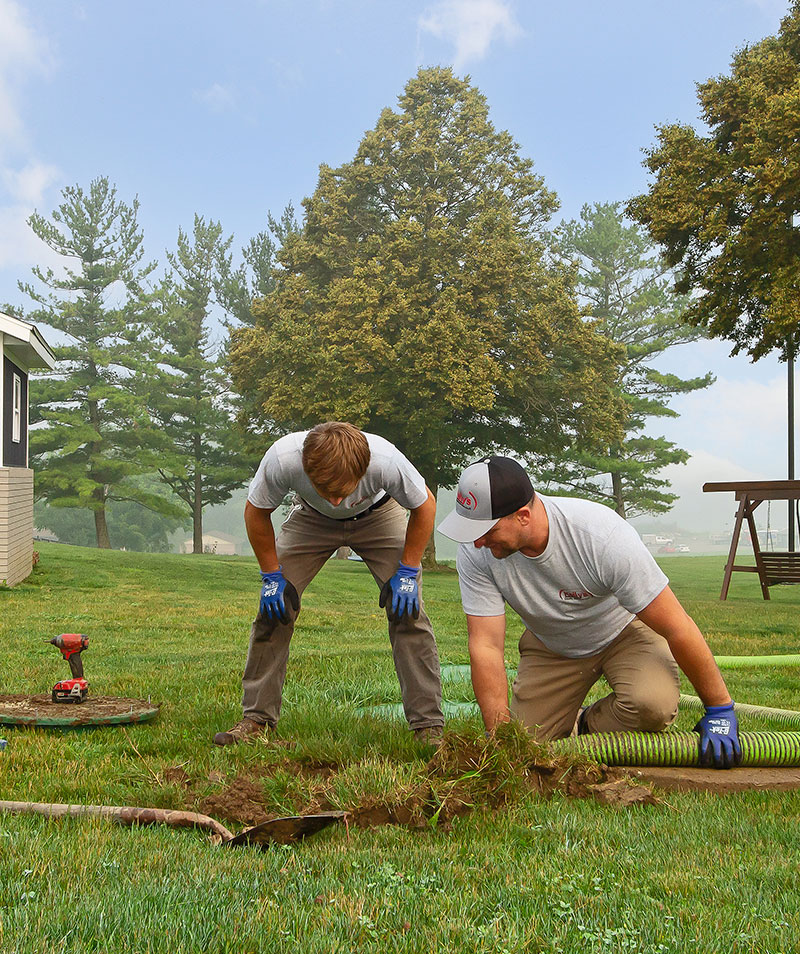
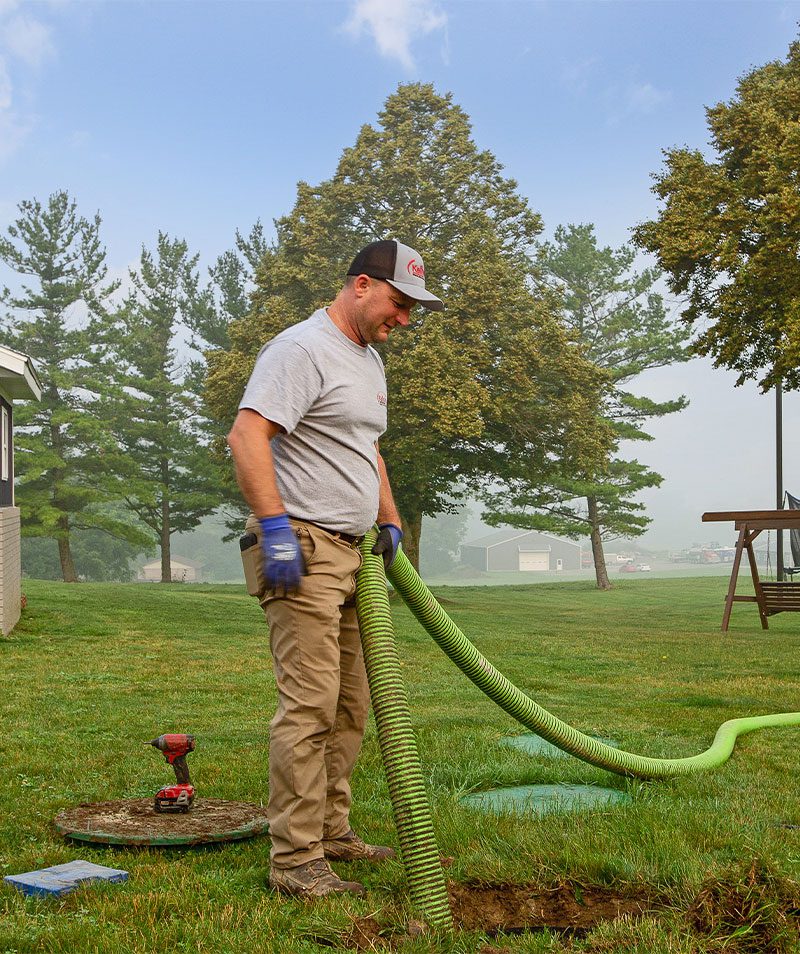
Regular septic tank pumping is crucial to maintain the health and efficiency of your septic system. Our skilled technicians are trained in pumping residential and commercial tanks, providing thorough removal of accumulated solids and liquids. We understand the unique requirements of different tank sizes and designs, and we have the expertise to deliver precise and efficient pumping services tailored to your specific needs.
Powerful Pumping Trucks:
At Kelly’s Septic Service, we utilize state-of-the-art pumping trucks that are designed to handle even the most challenging pumping tasks. Our trucks are equipped with high-capacity pumps capable of pumping up to 4500 gallons per truck. This means that we can handle large volumes of waste efficiently, minimizing the time spent on-site and reducing any inconvenience for our customers.
Power Washing Capabilities:
In addition to standard pumping services, we also offer optional power washing capabilities upon request. Power washing can be beneficial in situations where additional cleaning is required, such as when dealing with stubborn debris or blockages in the septic tank or drain field. Our power washing services utilize high-pressure water jets to effectively remove buildup and restore optimal flow within your septic system.t when necessary. Rest assured, our experts will provide effective solutions tailored to your specific needs, ensuring the proper functioning of your septic system.
Professional and Reliable Service:
Kelly’s Septic Service is dedicated to providing professional and reliable pumping services. Our team of experienced technicians understands the importance of prompt and efficient service, as well as the need to respect your property and minimize disruption. We strive to arrive on schedule, complete the pumping process quickly and effectively, and leave your property clean and tidy.
Regular Pumping Maintenance:
We emphasize the significance of regular septic tank pumping as part of routine maintenance. Our team can work with you to develop a pumping schedule that aligns with your specific needs and the recommended guidelines for your system. Regular pumping helps prevent issues such as backups, drain field problems, and potential system failures, extending the lifespan of your septic system and ensuring its optimal performance.
Contact Kelly’s Septic Service today to schedule your residential or commercial tank pumping service. Whether you require routine maintenance or have an urgent pumping need, we are here to provide you with professional, efficient, and reliable pumping services. Trust us to keep your septic system in top condition for years to come.
Kelly's Septic Service, LLC
1771 County Rd. 130
Bellefontaine, Ohio 43311
Kelly’s Septic Service Offers A Diverse Range Of Products And Services!
Frequently Asked Questions
Household septic tanks are typically pumped every one to three years; however, every household is different. Older systems are typically smaller and depending on usage may need to be pumped more often. Alternative systems with electrical float switches, pumps, or mechanical components should be inspected more often, generally once a year.
In most cases you probably have a plugged main line or your septic tank is flooded or overfull. But, in some cases a vent problem could cause gurgling
Your tank is full of waste water from the toilet, shower, wash machine, dish washer and all of those things you never want to see again! Some of this matter accumulates at the bottom of the tank or gets stuck floating near the top, lessening the capacity of your septic tank.
Yes! Bacteria must be present in the septic tank in order to break down and digest the organic solids. Today, households use a wide range of antibacterial soaps, detergents and cleaning fluids. While these ordinary household products do a great job killing unwanted bacteria in your home, they also destroy beneficial bacteria that your system needs in order to function properly.
Hydro-jetting services use pressurized water to clear away clogs and blockages in your septic lines. We push a hose with a specialized nozzle through the pipe, continually clearing blockages from your house to your tank.
Yes. Many materials that might be poured down the drain do not easily decompose. This can be harmful to the healthy bacteria that grow in your septic tank and drain field to help break down organic matter. Do not pour grease (such as fats, butter, wax, cheese, heavy cream), liquid wastes (such as pesticides, drain cleaners, household chemicals, paints, paint thinners), oils or coffee grounds down the drain. If you have a garbage disposal, limit its use because food waste can add an unnecessary amount of solid material to your septic tank. Harmful chemicals put down your drain can also be discharged into the groundwater and can impact drinking water supplies and the environment.
